Friedrich Kirschner: “Technology now promises to show us the ‘beyond-human,’ the ‘what could come next,’ a better version of ourselves.”
DE GRIGORE BURLOIU
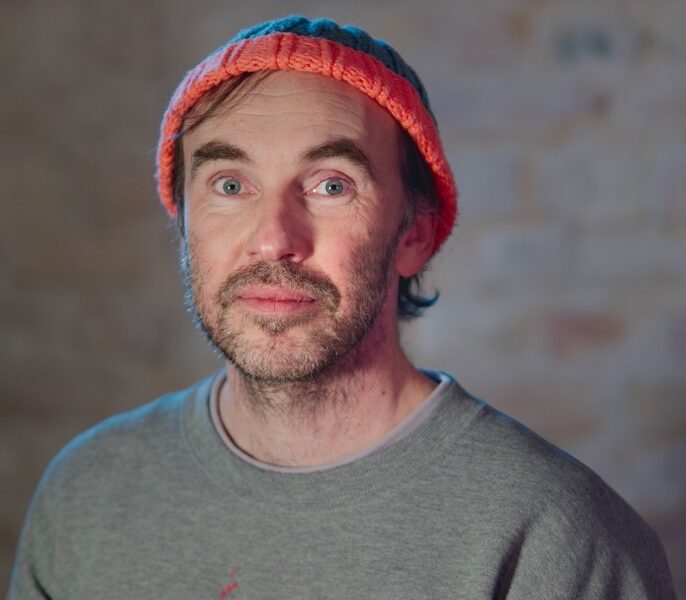
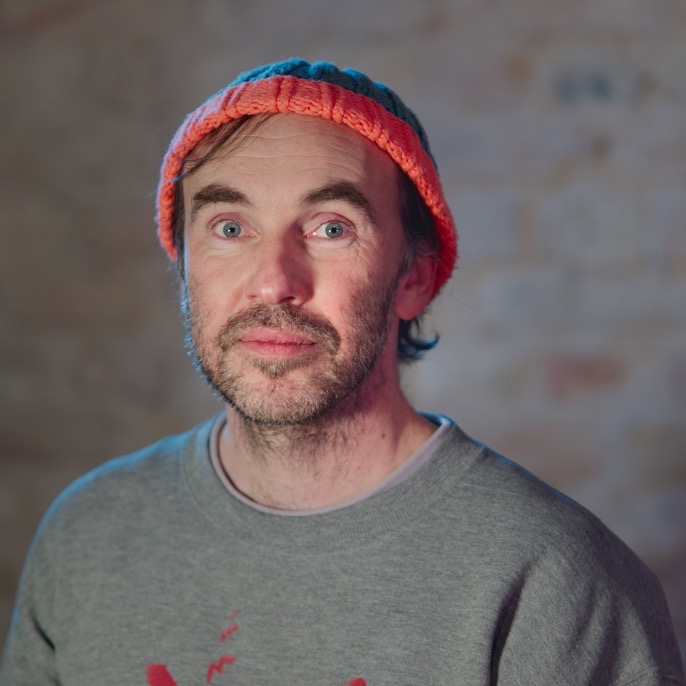
Friedrich Kirschner is a visual artist, software developer, and educator from Berlin. He uses social interaction and code as an artistic framework for participatory theater, speculative world-building, and video games.
His works have been presented at numerous international new media festivals and exhibitions, including the Ars Electronica Festival in Linz, Laboral in Gijón, the American Museum of the Moving Image in New York, and the Seoul Media Art Biennale, as well as in theaters such as HAU Berlin, Deutsches Theater Berlin, Eyebeam New York, Teater Nordkraft in Aalborg, among others.
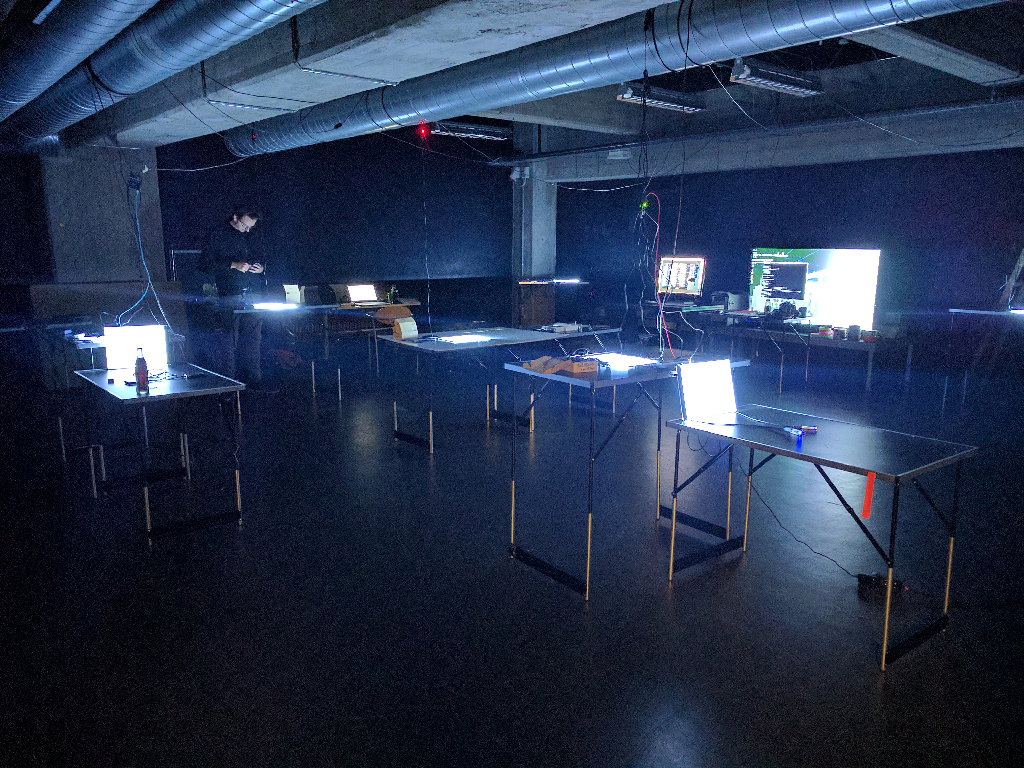
Between 2012 and 2024, he was a professor of digital media at HfS Ernst Busch in Berlin, where he founded the Spiel und Objekt master’s program. His recent work in the field of video games has been nominated for the German Video Games Award and received a special mention at the Animated Games Award at the Stuttgart Trickfilm Festival. From August 7–9, 2025, at the CINETic center within UNATC, he led the workshop Exploring Speculative Futures.
The workshop was organized by the Master’s program in Interactive Technologies for Performing and Media Arts (ITPMA) at UNATC, which holds its admissions every year at the beginning of September. Applications for ITPMA can be submitted online here until September 9.
Please give us a quick description of the workshop, and how it relates to your work as an artist and educator.
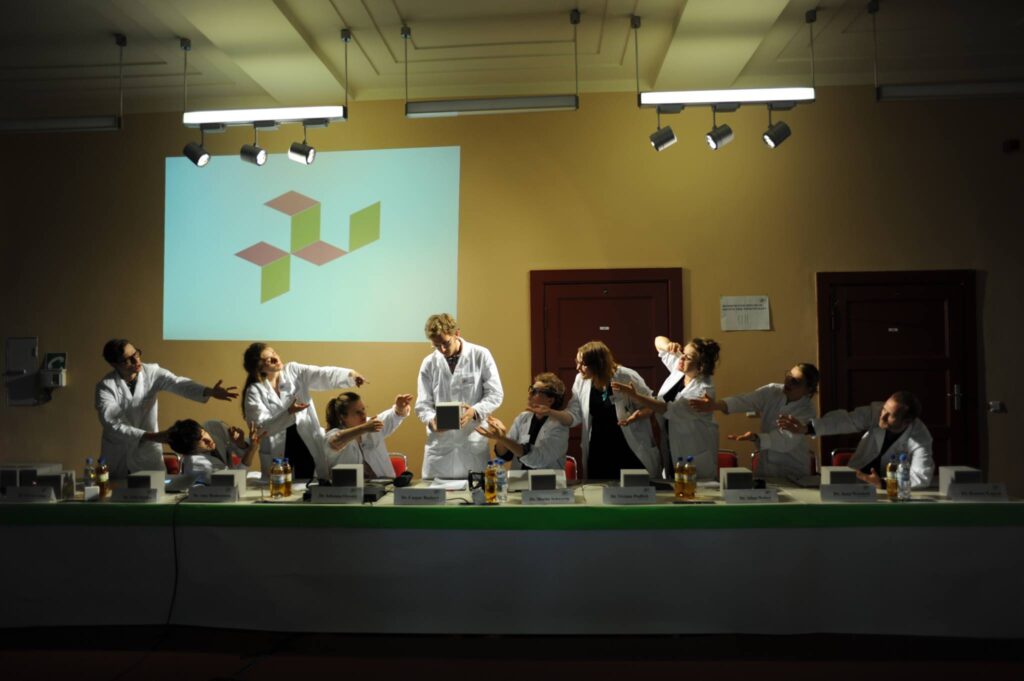
The workshop combines the basic pillars of the MA program Spiel und Objekt that I had founded in Berlin in 2018. It combines interactive technologies, devising of rules and participation in a unique way that flattens the hierarchies within the theatre space and shifts the rhetoric of the art-form from a pedagogical perspective to one of communication, negotiation and communal struggle. It also celebrates the theater space as a place for utopian and dystopian struggle and action – always centered on human struggle, and technological being a tool to facilitate agency. These foundations still drive my art today, both in theater and interactive media.
Some of your early work was in the machinima (game engine film) art scene. Do you see comparable movements emerging today?
Machinima has shifted significantly – as has the overall sentiment towards technology. In its heyday during the early 2000, tech was seen as a force for bringing people together, overcoming borders and cultural boundaries and enabling a pluralism of voices to enrich our cultural landscape. Using video-game technology to broaden the scope of cultural expression beyond dominant aesthetics was a key factor in my involvement in the machinima movement. As we all know, a lot of this has been swallowed up into what is now known as User Generated Content – and the mercantilization and algorithmization of „content” has turned the idea of individual expression and pluralism of cultural appropriation into a perverted accelerator for marketing. There are still a number of wonderful creators whose work is specifically addressing this shift in context – namely Steven Cottingham’s work or the work by artist collective Total Refusal.
How do you see the framing of media arts practices more generally, and how has this evolved since you began?
When I was involved in media arts, technology still had space for the unknown, the tinkering, and the human. A lot of my work involved very human scale silliness like scanning 3D objects using milk, modding Unreal Tournament into a puppetry show or using a weird golf-controller to control virtual cameras. It felt like artists appropriated technology to create sensual and sensible questions about human connection with and without new technological practices. My perspective now, a couple of years after NFTs and the pandemic, is that technology has in large parts integrated artists into their marketing message. Technology is now supposedly ready to show us the „beyond-human”, the „what could be next”, the better version of ourselves. It is a co-opting of the aesthetics of interaction without any of the friction that my understanding of art was supposed to enact. It is also much, much more precarious to work in new media that it used to be – as a lot of institutional funding has shifted away from a curatorial system towards a system of political leverage where art funding is tied to incentivize talking points, like AI or environmentalism. This is not to say that similar forces weren’t in effect in the early 2000s – it’s always been a dance with tech-companies to what extent you are advertising their products and to what extent you are appropriating their products. It’s just become much more common for art to be thinly disguised design or advertisement.
In your view, what role can education play in negotiating these realities?
Education is a place that can align artistic work towards ideals that are coming out of lived reality, a social reality, and a human struggle that is pluralist and agonistic. It can uphold an ideal of artistic practice that is independent of product sponsorships and trends and a place that allows for longer-term research and practice. It allows individuals to explore the fundamentals of what it is that they want to add to the conversation and it has the right to discount market realities to focus on the work itself.
Of course these ideals have been overburdened and overstressed in the past, leading to professional misconduct from teachers towards students and a general lack of contemporary governance – specifically in art schools.
So in order to persist and in order to still uphold the ideals of artistic practice that I find incredibly important in today’s market driven realities, higher education must strive for a new respect towards students and their realities – and reevaluate their governance and power structures to provide a space for creative expression and empower art that goes beyond our notions of tradition in education. Specifically in new media art.
How did the workshop participants in Bucharest respond to the ideas and practices you proposed?
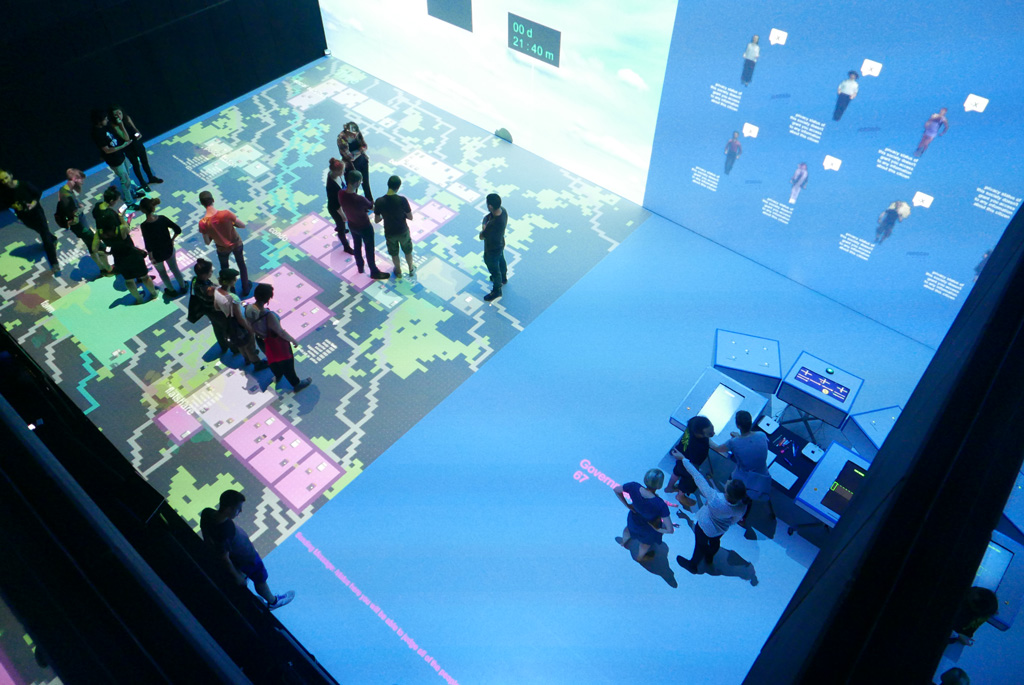
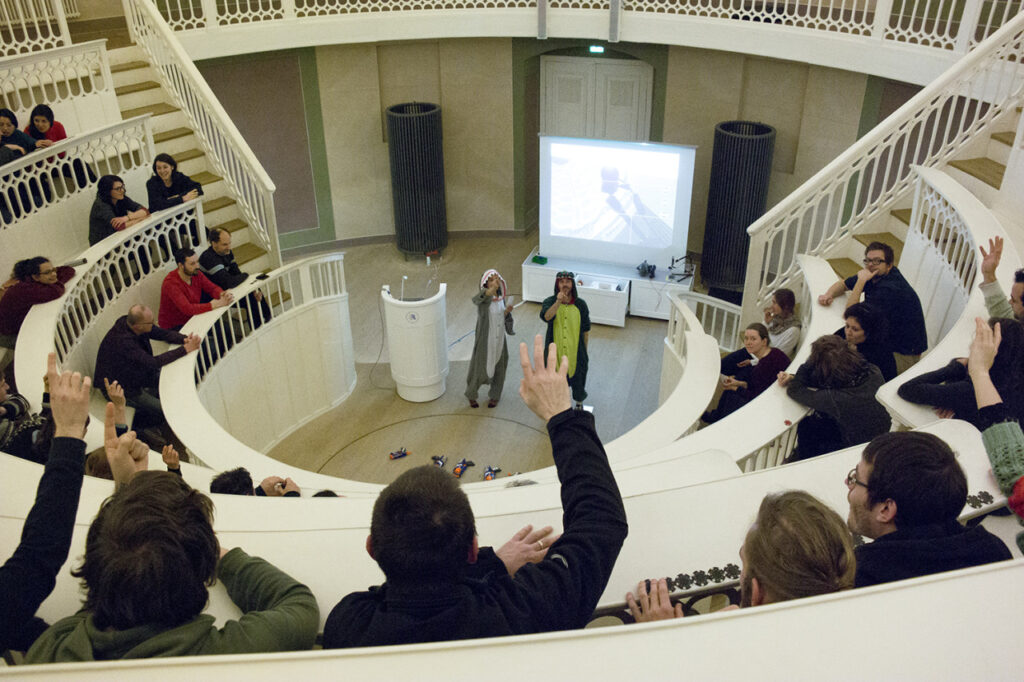
I think initially, the scope of what we were discussing was hard to frame, because it is well outside any known genre or immediate field of application. Creating rules for social participation as an aesthetic practice touches on many of the fields that the participants were already educated in – stage design, film directing, interaction design and screenwriting – but there is no immediate use case. It is more a combination of many of these fields – and I think this is where we struck a chord together – that the term experience design really can mean a lot more than just placing buttons on a website or programming an arduino in an exhibition setting. I think after playing the sketches of each of the groups, everyone understood what profound possibilities lie in theatrical setups that give participants agency – and how empowering world- and interaction-design can be when you see it as less of a technical discipline but a social and artistic practice.
What would be your main takeaway from the workshop? Is there anything you (or we) might do differently next time?
The main takeaway for me as a facilitator during the workshop is that giving space for people to design rules, give agency to participants and fill with narrative and friction is a profoundly utopian endeavour – it is growing more and more outlandish to propose in times of shrinking budgets and pragmatic student interest. But seeing the outcomes and the effect this has on the way participants now think about art, governance and social space – the way people’s understanding of what art could be expands – is a wonderful experience.
I would change the governance structure within the workshop though – as there was a clear code of conduct missing and participants were suffering from a person who would continuously not respect other people’s time and take up too much space for themselves. A more clear set of rules on how we want to work together during workshops – and consequences for people not adhering to these rules should be put in place before, and I’ll make sure to incorporate that in my future endeavours.
Would you have some advice for young people looking to study and work in media arts or game design today?
Yes! Don’t do it because of fame, or because of a job that you want. Do it because it allows you to express yourself in a way that other things don’t, because it allows you to communicate to the people you love, or need, or have to live with. And most of all, enjoy it! It is tremendous and wonderful to be able to spend time researching how our world full of nature, humans, machines and whatnot arranges itself – and it is wonderful that you want to participate in the arrangement, in the wonder, in the investigation.
Any closing thoughts?
Thank you very much for inviting me to Bucharest – it was super good to interact with the wonderful group of participants and I am looking forward to this next group of students and their ideas and ideals.