Ecaterina Aguiar-Lucander: „Eva Foundation is meant to serve as a bridge between Romania and the international art scene”
Foto: Raluca Margescu. Courtesy of EVA Foundation
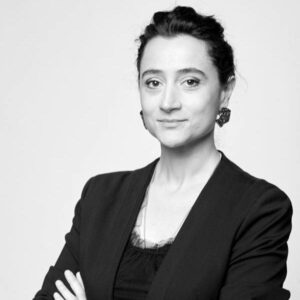
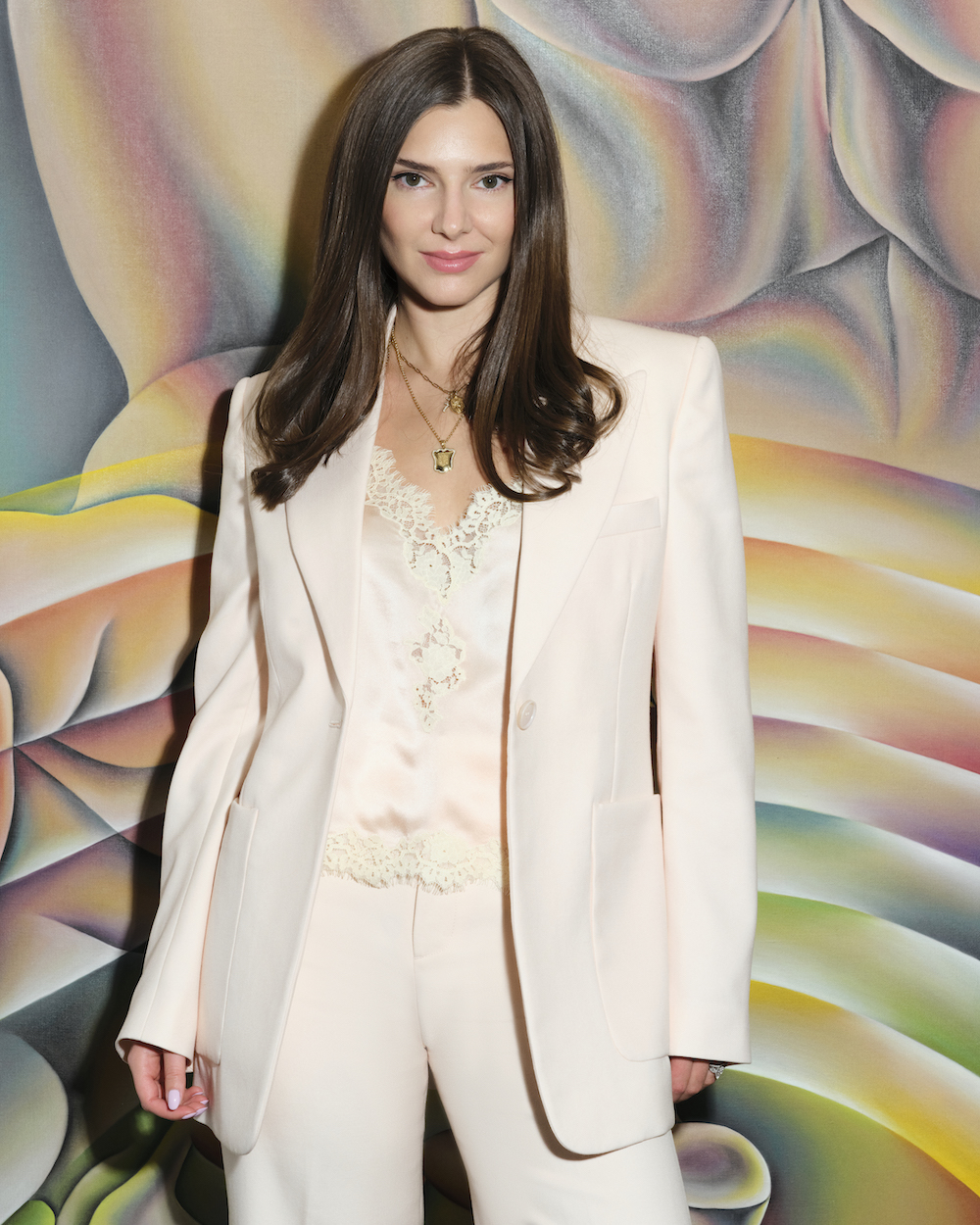
Born and raised in Bucharest and based in New York, Ecaterina Aguiar-Lucander is a curator and collector of women artists whose practice is driven by art’s visceral, transformative potential. Her curatorial approach reflects a deep understanding of the subtly subversive power of art to inspire and provoke thought.
She received her undergraduate degree from Yale and her master’s degree from New York University’s Institute of Fine Art, where she completed her thesis on Romanian expat painter Hedda Sterne. After establishing her career in the New York art world, she sought to give back to Bucharest’s vibrant cultural landscape by founding EVA Foundation— a platform that embodies her commitment to women artists. She is a member of the Metropolitan Museum’s Vanguard Council, the New Museum’s Artemis Council, and the Guggenheim’s Young Collectors Acquisition Committee. With EVA Foundation, she declares a transnational interpretation of art history, drawing connections between works of seemingly disparate origins and shining light on the past to illuminate the present, with an eye on the future.
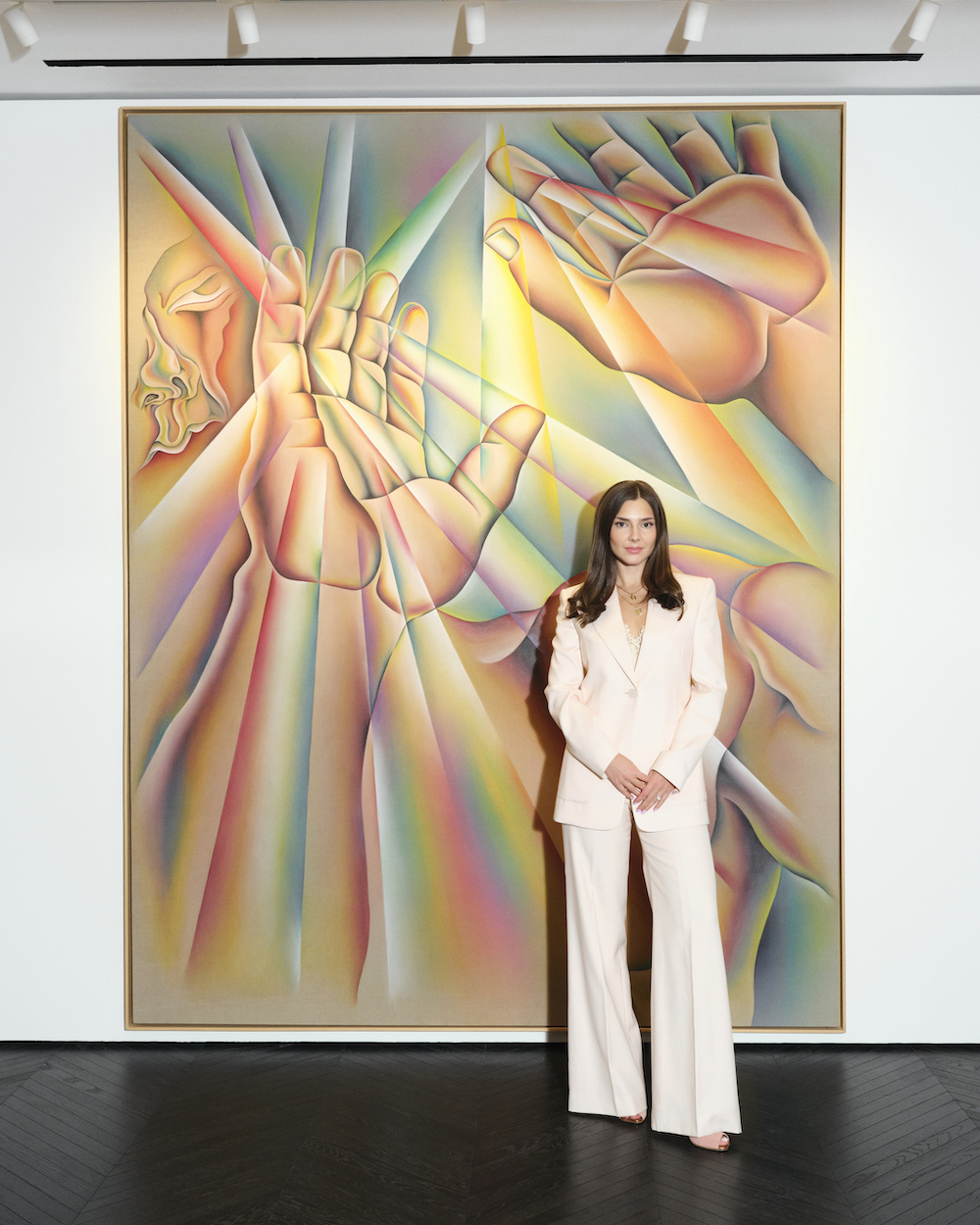
EVA Foundation’s collection is a celebration of women artists and their indelible mark on art history. By placing emerging voices in dialogue with celebrated figures such as Judy Chicago and Alice Neel, the collection traces a lineage of innovation and subversion across time and geography. Artists represented span more than a dozen nations— including Romania, Kenya, Japan, the United Kingdom, the United States, Peru, and Morocco— underscoring EVA’s commitment to a truly global feminist perspective.
Growing up I was passionate about history and sociology, and while I spent time at art museums with my family, it was only when I took art history classes at University that I began to see the art object as an academic source rather than an aesthetic product. I think early exposure was incredibly important to orient and ground myself, but rigorous academic study was indispensable.
For the collection I show at Eva Foundation, the most formative class I took was called „Feminism and Contemporary Art” in my last year at Yale. It was a survey class that looked at the roots of art production by women, starting actually with Judy Chicago and Jenny Holzer. It’s in this class that I understood Feminism not only as a form of art production, but also as a lens through which art is viewed. I felt so fortunate to have learned as much as I did in that class, and wanted to transmit part of it through the texts crafted at Eva.
My focus in my Master’s was Women Abstract Painters, and I wrote my thesis on Hedda Sterne because I was fascinated by her immigrant status, how did a Romanian woman find herself at the apogée of the American Abstract Expressionist movement? „Sirens” opens with one of her paintings from the New York series, a larger work from the same series was on view at MoMA New York while I was writing my dissertation.
Honestly I would say that my personal taste influenced the galleries I applied to work for! I always loved Tracey Emin, ever since I saw a couple of small works on paper at a Royal Academy Summer Show maybe when I was 12 or 13. I love art that is powerful and critical in that way. I coincidentally collected Marguerite Humeau, Howardena Pindell and Sara Flores long before they each joined White Cube, but definitely see now the affinities between them and the broader gallery roster.
My first job out of college was as an intern at Gagosian in Los Angeles, and my tasks included sending an update to everyone in the gallery on all the exhibitions that were happening as well as any pertinent art world news. I think that pushed me to engage with the local scene, discover new artists, go to gallery openings, and have my finger on the pulse of the city. I think that is the most significant influence on collecting – feeling the zeitgeist.
From the collection at Eva, the first work I bought was the Louise Nevelson. It is also the work that inspired Bogdan Ciocodeica’s interior redesign of the space. In the Feminism class I mentioned earlier, there was a guest lecture from Julia Bryan-Wilson, a specialist in her practice who later published a book on Nevelson’s sculptures. I could not believe it when an installation of this scale appeared at auction…
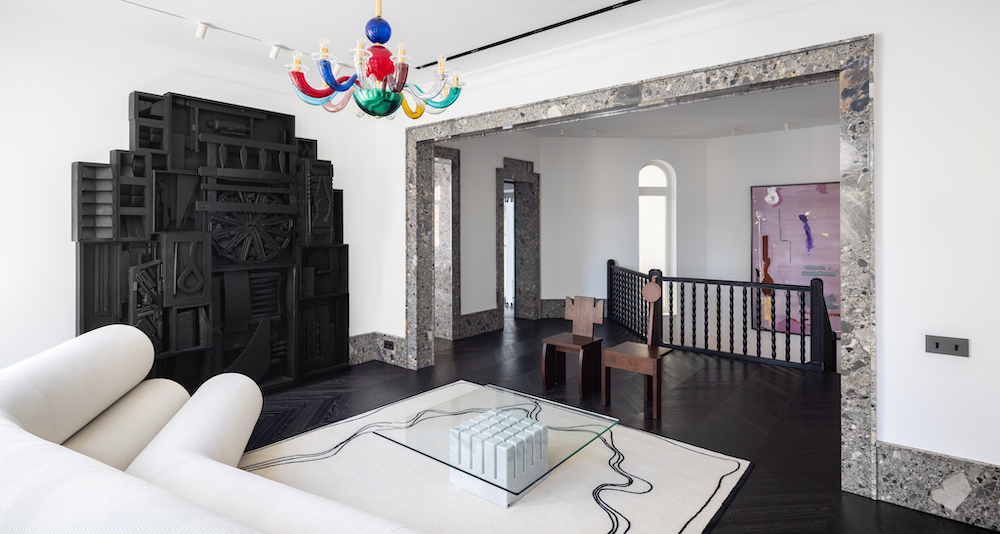
The most recent work I bought at Eva is the Carrie Moyer painting. The wall across from the Nevelson was one of the most difficult to fill and I probably have been thinking about it for two years or so. I knew I wanted it to be an abstract painting but nothing felt right. I am not an intsinctive person when it comes to collecting, I am usually very thought out and need my time to make a decision. But I saw this Carrie Moyer painting and I just loved it, and I bought it then and there at Basel last year.
I collect Andra Ursuța in depth and have work by her across mediums, I think she is an exceptional artist. More historical, I have a number of works by Hedda Sterne and Geta Bratescu. I also love seeing the programs of local Bucharest galleries and have acquired pieces by Victoria Zidaru and Nona Inescu.
A painting by Firelei Báez.
The Helen Frankenther piece White Lilac was created while the artist had an exhibition of her work at the Guggeneheim museum in New York. It is a work she chose to keep in her collection and I was very fortunate to have been able to acquire it directly from the estate.
I would love a Louise Bourgeois Spider, the one at Dia: Beacon outside New York is incredible beause you can get close to see the segments of fused metal. Or the one at the Guggenheim in Bilbao has such a powerful form.
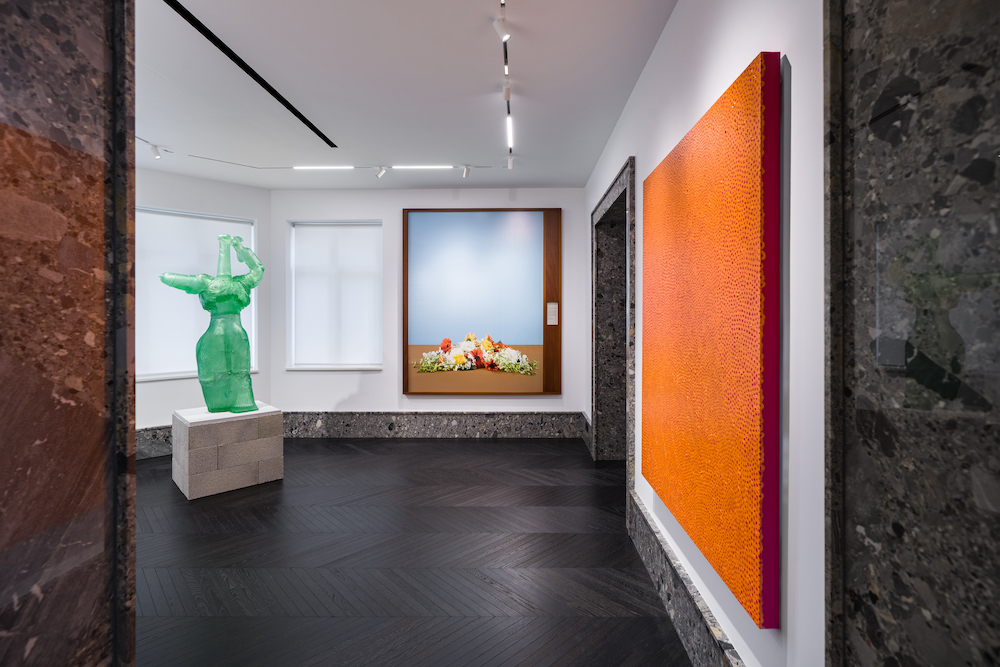
Eva Foundation is meant to serve as a bridge between Romania and the international art scene. My hope is that it will inspire a new way of looking at art, driven by critical thinking and active engagement. The two-year plan for Bucharest is to continue to grow the collection in anticipation of the next installation, and to invite visitors to come back for multiple visits over a longer period, to encourage closer looking and consideration.
In terms of 10 year plans I will just say that 10 years ago I was 19 in my first year at Yale taking thinking that I would become a macroeconomist! I am very proud of Eva Foundation as my first project in the private museum arena, and am equally curious as you may be to see what novel opportunities the next 10 years will bring.