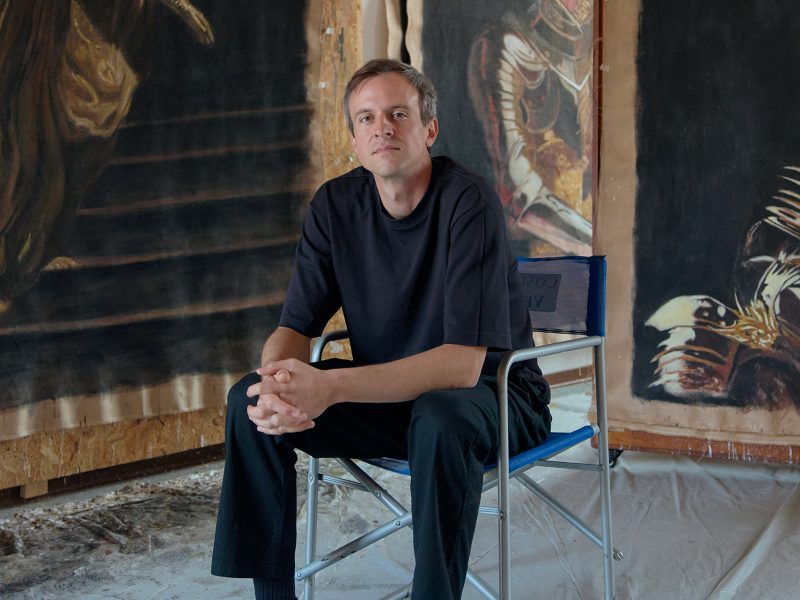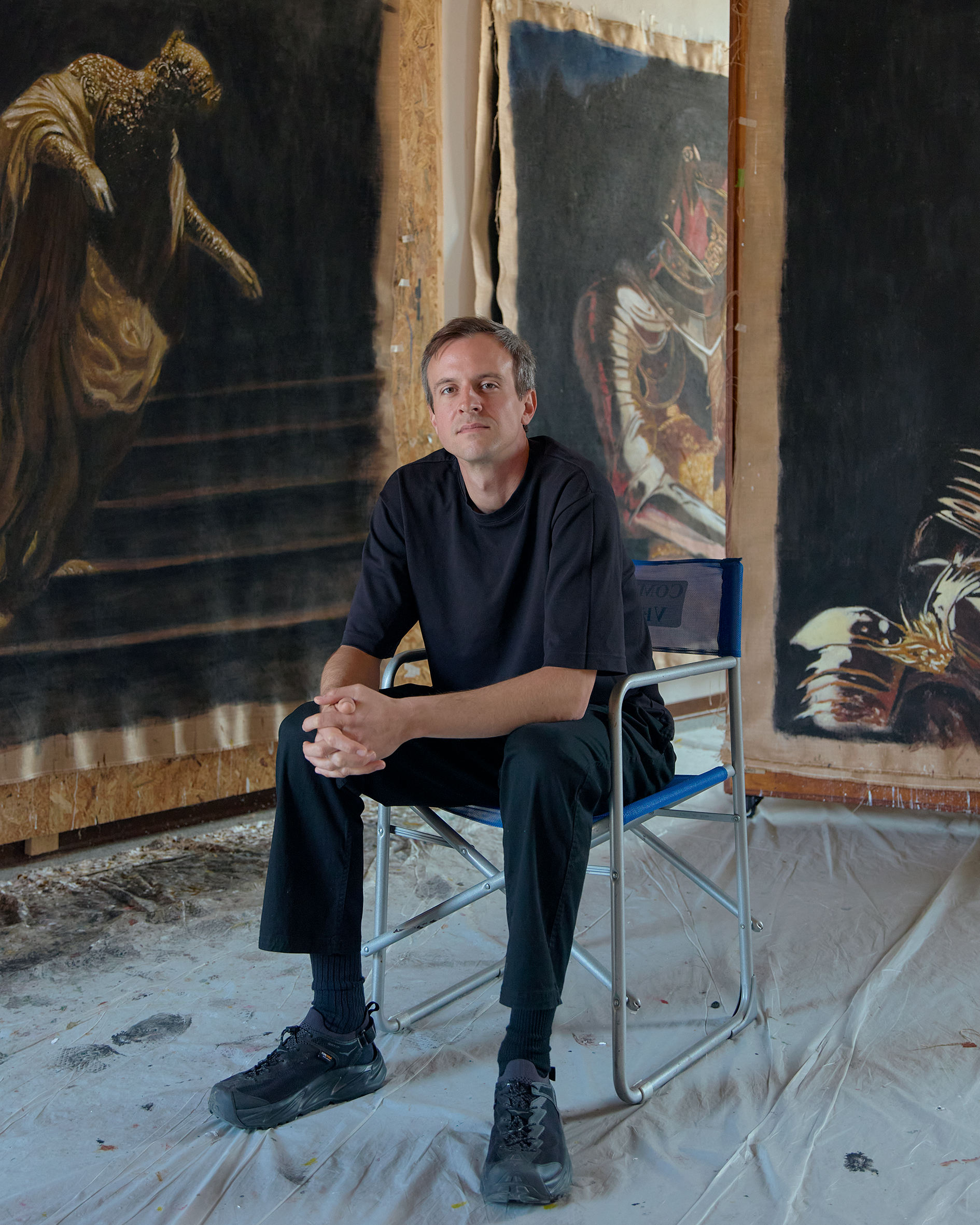
Jure Kastelic: „I think the idea of ‘the other’ or ‘the outsider’ exists in everyone to some degree”
From economic tensions and the traps of contemporary technology to the echoes of history and dissident communities, artist Jure Kastelic’s visual universe invites deep reflection on the states of transition we are experiencing today. Born in Slovenia and based in Venice, Kastelic explores in his surreal works the figure of the „outsider” – that character caught on the border between safety and vulnerability, who refuses to conform to the rules imposed by a world out of sync. Kastelic’s works have been exhibited internationally including at: Bernheim, London and Zurich (2025); Carl Kostyal, London (2025) and Milan (2024); Pact Galerie, Paris (2025); Mare Karina, Venice (2024); Pareidolia Foundation, Venice (2024); UGM,
Slovenia (2023); Ljubljana Biennial of Graphic Arts (2021); Showroom Fabio Gatto, Milan (2021) and others. His works are included in the collections of AMOCA, Wales; Musée National d’Histoire et d’Art, Luxembourg; Herbert Smith Freehills, London; and private collections worldwide. On the occasion of his presence in Romania for the exhibition „Celălalt / The Other” at IOMO Gallery we talked to him about inner resistance, anachronism, and what it means to be fully prepared for a time that no longer exists.
The concept of the exhibition ‘Celălalt / The Other’ stems from a specific charge in Romanian culture and folklore, yet it brings together an international group of artists. How does your visual universe resonate with this idea of power originating from a refusal to conform?
I think each artist in this exhibition brings a unique perspective to something ultimately universal: the fight for integrity and the refusal to conform to injustice.
The folklore and history of where I grew up are deeply rooted in this same non-conformist spirit. The stories I learned were filled with characters on quiet or overt quests against higher, oppressive forces, whether resisting occupying powers or revolting against unfair authority. Growing up with that narrative framework has always fueled my practice.
Rather than depicting literal conflict, my work explores the internal side of that spirit, the psychological state of figures who exist on the edges or at the threshold between safety and resistance. Refusal to conform isn’t always loud. In my practice it often manifests as a deliberate stepping back, a retreat into self-containment, or a quiet refusal to accept the terms set by the outside world.
The concept relies on the unique weight of the Romanian word celălalt (the other) and figures from local folklore. How do you think the Bucharest public will engage with your work within this specific conceptual framework?
The specific cultural weight of celălalt in Romania is a rich backdrop, but the core feeling is universal. I think the idea of ‘the other’ or ‘the outsider’ exists in everyone to some degree. It expresses itself in different ways across every level of life, within our families, our social circles, or our home regions. Rather than seeing a foreign narrative, I hope viewers connect with the quiet autonomy of figures who choose to inhabit the margins rather than the center.
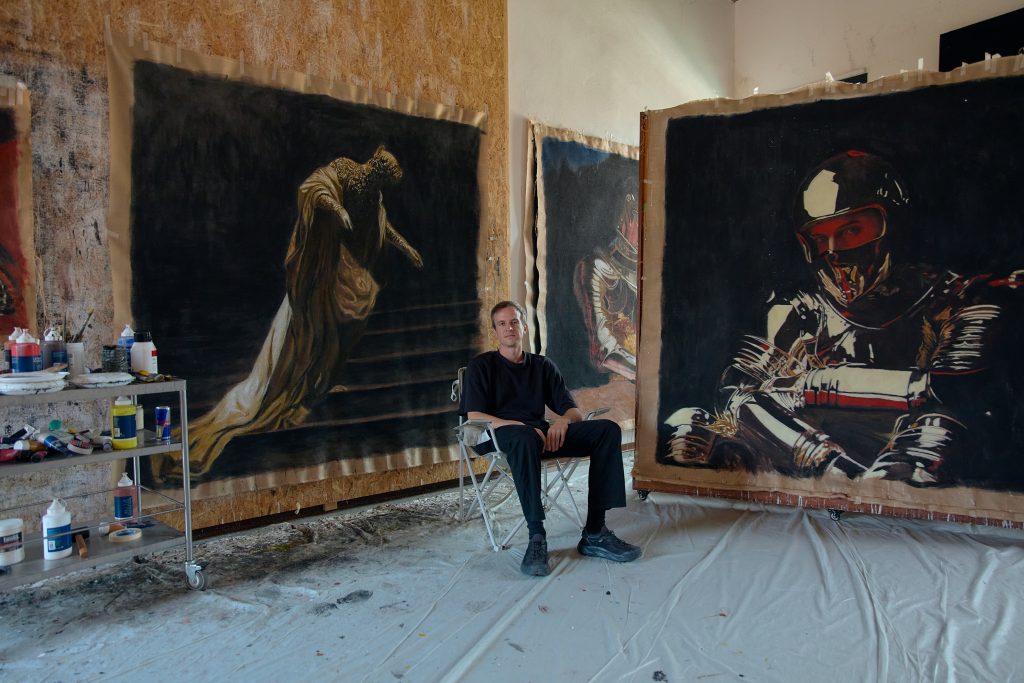
In your artistic research, you often explore the idea of being „fully prepared for a time that no longer exists.” How does this sense of anachronism connect with the position of an outsider or „The Other” in today’s society?
This idea stems directly from observing what it means to come of age today. The traditional blueprint for life – education, a stable career, homeownership, rarely functions as promised. Many find themselves outpriced, burnt out, or facing a murky future. We live in a threshold moment where the old world is fading, but the new one hasn’t emerged yet. Being an outsider today often means living in that space in between. In my practice, being ‘prepared for a time that no longer exists’ reflects this condition, holding onto an internal logic or set of values while navigating a present that feels out of sync. It transforms the feeling of being misplaced into a form of quiet resilience and autonomy.
You draw inspiration from highly diverse sources – ranging from dissident communities and classical painters to economic history and contemporary technology. How do these opposing worlds interact when building your surreal scenarios?
I see these diverse sources as different layers of a single narrative, one that is rooted in today, but filtered through historical or fantastical distance. Reading today’s news can make it feel like the worst of times, while reading history suggests we’ve never had it better. I like to work within that tension, turning these opposing views inside out to find clarity for myself. Merging different visual traditions with modern technological and economic realities I hope creates a sense of temporal displacement, allowing my work to feel simultaneously ancient and uncomfortably present.
Without spoiling the layout on the gallery walls, what mood, question, or experience do you hope your work will trigger for visitors as they navigate Celălalt / The Other?
Rather than delivering a direct statement or forcing a dramatic narrative, I want visitors to feel the atmosphere of a threshold, that distinct psychological state of sitting right on the edge between safety and vulnerability, or between engagement and withdrawal. If a visitor leaves feeling a little more at peace with their own internal ‘outsider,’ then the show has done its job.